Birds & solar panels
Pigeons Under Solar Panels? What to Check and What to Do Next
It often starts with a bit of cooing above the bedroom. Then you notice birds landing on the same part of the roof each morning, or droppings appearing on the path below. If pigeons are getting under your solar panels, it is worth finding out whether they are simply sheltering there or have started nesting.
Here is how to spot the difference, what you can check safely from the ground, and when solar panel bird proofing makes sense for a home or business in Derbyshire.
Quick navigation
- Signs birds are using the panelsWhat you can see and hear without going onto the roof
- Why they choose the gapShelter, access and repeat visits
- What to do firstA short, practical checklist
- If there is an active nestWhy the timing of work matters
- How proofing worksInspection, clearance and a suitable barrier
- Common questionsCleaning, mesh and when to ask for help
How can you tell if pigeons are getting under the panels?
One pigeon sitting on the roof is not proof of a problem. What matters is a pattern. Watch from a safe spot outside for a few minutes, ideally at a time when you usually hear them.
- Repeated trips to the same edge. Birds disappear beneath the array rather than just perching on top.
- Noise in one place. Cooing, fluttering or scratching comes from the panel area, often early in the morning.
- Material at the roofline. Twigs or other nesting material may be visible at the panel edge or in the gutter below.
- Mess beneath the same spot. Droppings collect on a wall, window, patio or driveway below the array.
Regular visits suggest the birds have found a sheltered spot. You cannot reliably confirm whether a nest is active from the ground, so avoid assuming the space is empty just because you cannot see into it.
Why do pigeons choose solar panels?
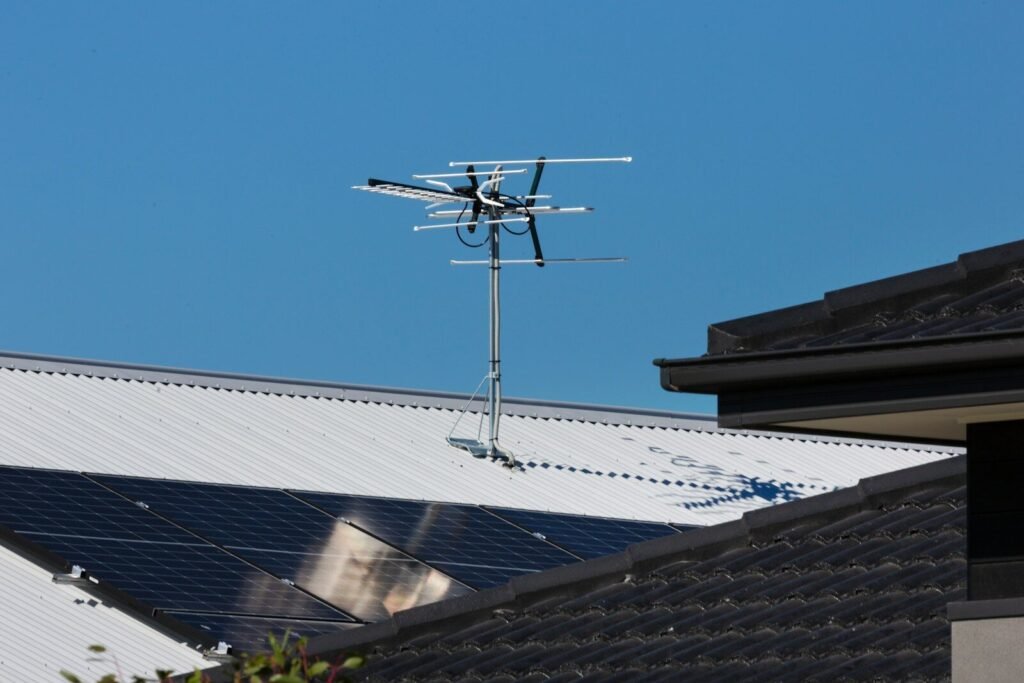
On a pitched roof, the space between the panels and the tiles can offer cover from wind and rain. The array also gives birds an edge to land on before moving underneath. Once a place feels safe, the same birds may keep returning.
The useful question is: are they landing on the roof, or are they regularly going under the panels? Proofing the gap addresses access beneath the array; other perching spots on the building may need separate attention.
If pigeons are also using ledges, gutters or nearby roof areas, take a look at the wider bird control service. This helps distinguish a panel issue from a broader roofline problem.
What should you do first?
Watch and make a note
Record where birds enter, roughly when they appear and whether they carry nesting material. A short video from the garden can be useful when you ask for advice.
Check below the roofline
Look for fresh droppings, loose twigs and any gutter overflow you can see safely. Keep people clear of heavily fouled areas until they can be cleaned appropriately.
Leave the panels and nests alone
Do not climb up, pull out material, block an occupied gap or spray anything beneath the panels. Work at height and around a solar installation needs the right equipment and care.
Ask for the right assessment
A bird proofing specialist can check the perimeter and bird activity. If you can see damaged panel components or exposed wiring, contact your solar installer or a suitably qualified electrical professional as well.
PCSM’s solar panel proofing service covers inspections and options for reducing access beneath the array across Ripley, Derby and surrounding Derbyshire areas.
What if there is already a nest under the panels?
Timing becomes important. In England, it is unlawful to intentionally damage or destroy a wild bird’s nest while it is being built or used, or to take or destroy its eggs. The safe approach is to have the activity assessed before any clearance or mesh is fitted. Do not rely on a calendar date alone: check whether the nest is active.
If an active nest is present, the work may need to wait until it is no longer in use, or require specialist advice about what is legally possible. You can read the current GOV.UK guidance on wild birds and nests. Once the space can be dealt with lawfully, proofing can help stop birds getting back underneath.
How does solar panel bird proofing work?
The usual aim is to close off access around the edge of the array with a suitable bird proofing barrier. Before that happens, someone needs to check the installation, the roof, and whether birds or nests are currently underneath. Any permitted cleaning or clearance should be planned before the gap is closed.
What proofing can do
Reduce access to the sheltered space beneath the panels and make repeat nesting there less likely when the barrier is fitted and maintained correctly.
What it cannot do
Stop birds from ever landing on your roof or solve activity on nearby ledges, chimneys and gutters by itself. Those areas may need separate advice.
There is no one-size-fits-all fitting method. Panel layout, roof access and the condition of the existing installation all matter. For details of what PCSM can assess, see the Derbyshire solar panel proofing page.
When is it worth getting help?
If birds repeatedly go under the panels, you can see nesting material, or mess is building up below the roof, arrange an assessment before trying to seal anything. It is especially useful to act while activity is still limited, because the next step depends on what is actually under the array.
PCSM works with homes, landlords and businesses in Derbyshire. Send a photo or a brief description through the contact page, including where the birds are entering and whether you have noticed twigs, noise or droppings. That gives the team a sensible starting point for advising you.
Questions people often ask
Does seeing pigeons on my panels mean they are nesting?
No. Birds may perch on a panel without using the gap beneath it. Repeatedly disappearing under the same edge, especially with nesting material, is a stronger reason to get the area checked.
Can I put mesh around the panels myself?
Do not seal a gap until you know it is clear of birds and active nests. Roof work also carries fall risks, and the barrier needs to suit the installation. Start with an inspection and ask your solar installer about any product or warranty requirements.
Can the panels be proofed if birds are already there?
Often there is a route to proofing, but the timing and preparation depend on whether nests are in use. An inspection is the first step; an active nest must not simply be covered over.
Will solar panel mesh stop pigeons sitting on my roof?
It is designed to reduce access beneath the panels. Birds can still land elsewhere, so a wider bird control assessment may be useful if other parts of the roof are affected.