Flying Ants in Derbyshire: Why They Suddenly Appear and What To Do
One day everything looks normal. The next, there are flying ants around the patio, crawling near the kitchen door, or appearing by windows. It can feel like they have come from nowhere, but flying ants are usually part of a short summer swarm. The key is knowing when it is normal, when it points to a nest nearby, and when ants inside the home need proper treatment.
Quick Answer: Why Are There Flying Ants Everywhere?
Flying ants are usually reproductive ants leaving a nest to mate and start new colonies. This often happens during warm, humid summer weather, which is why large numbers can appear suddenly on the same day.
If you only see flying ants outside for a short period, it may simply be a seasonal swarm. If ants keep appearing indoors, return every few days, or form trails around food areas, that is different. It may mean there is a nest close to the property or a regular entry route into the building.
What Are Flying Ants?
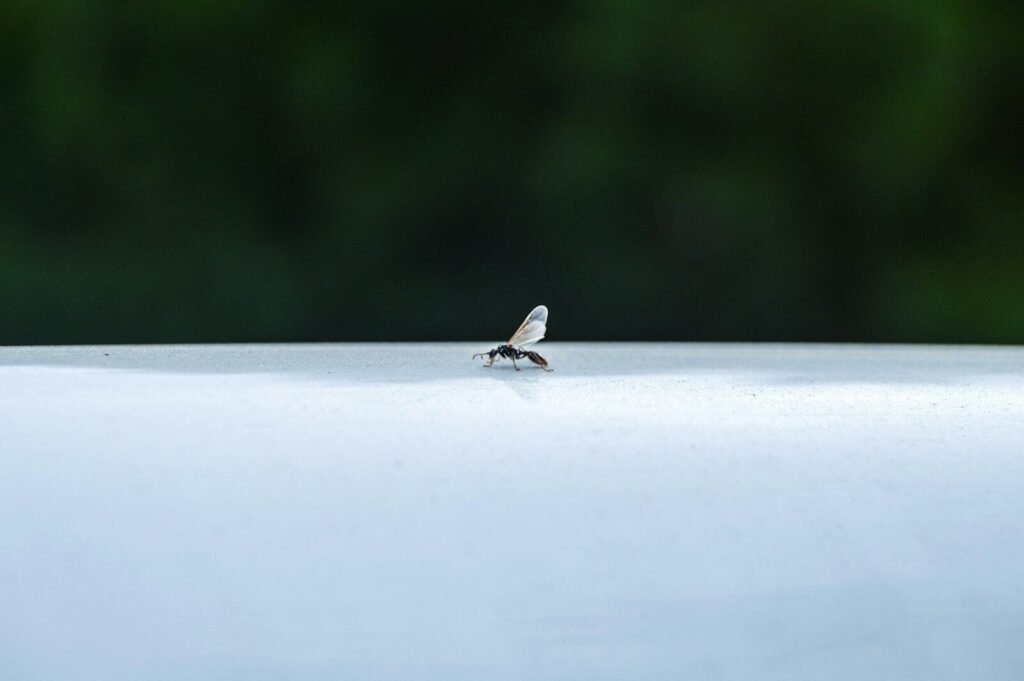
Flying ants are not a separate mystery pest. They are usually winged male and queen ants leaving established nests. During a swarm, they fly out in large numbers, mate, and the queens look for suitable places to start new colonies.
This is why people often notice them all at once. You may see them on paths, brickwork, garden furniture, windowsills, or around door frames. The sudden number can look alarming, but the swarm itself is often short-lived.
- They often appear during warm, humid summer conditions
- They may gather around windows, doors and sunny walls
- They can come from nests under patios, lawns, paving or wall edges
- A short outdoor swarm is usually less concerning than repeated indoor activity
If ants are repeatedly getting inside, our ant control service in Derby and Ripley can help identify the source and treat the problem properly.
Flying Ants Outside vs Ants Inside: What Is Normal?
Usually Normal
- Flying ants appear outside for a day or two
- Most activity is around paving, grass or garden walls
- You see them on a hot, humid day
- They disappear without returning indoors
- There are no trails leading to food or kitchen areas
Worth Investigating
- Ants keep appearing inside the kitchen
- You see ants around pet bowls, bins or cupboards
- They return after cleaning or DIY spray
- There are trails along skirting boards or worktops
- Flying ants are appearing from cracks, vents or internal walls
The main difference is repeat activity. A one-off swarm outside is often just seasonal. Ants repeatedly entering the home usually means there is a food source, moisture source, nest nearby, or an entry point they are using again and again.
Where Ants Usually Get Into Derbyshire Homes
Ants do not need a large opening. Tiny cracks and gaps are enough, especially if there is food, warmth or moisture nearby. In many homes, the problem starts outside and only becomes obvious once ants find a reliable route indoors.
Kitchen and Utility Areas
- Gaps behind kitchen units
- Pipe openings under sinks
- Crumbs, sugar, pet food or sticky spills
- Bins stored close to external doors
- Moisture around sinks, washing machines or dishwashers
Doors, Patios and Walls
- Cracks around patio doors
- Gaps under thresholds
- Nests under slabs or block paving
- Air bricks and wall vents
- Small gaps where extensions meet older brickwork
This is why treatment works best when the source is found, not just the visible ants. Spraying the few ants you can see may reduce activity for a short time, but it often misses the colony and the route they are using.
Why DIY Ant Treatments Often Do Not Last
DIY sprays can make it look like the problem is solved because the visible ants disappear. The issue is that ants usually follow scent trails. If the nest, food source or entry point is still active, more ants can return by the same route.
- Spraying only the visible ants but not the source
- Leaving food sources available overnight
- Missing nests under patios, paths or wall edges
- Not sealing obvious entry gaps once activity is controlled
- Using products in the wrong place and scattering the activity elsewhere
What You Can Do First Before Calling Pest Control
If the activity is light, there are a few sensible steps you can take before booking a treatment. The aim is to remove what is attracting them and work out whether the problem is temporary or recurring.
- Wipe down worktops, floors and cupboard edges where ants have been seen
- Store sugar, cereals, pet food and dry goods in sealed containers
- Clean under appliances and around bin areas
- Move pet bowls and clean up food residue after feeding
- Check patio doors, pipe gaps, air bricks and skirting boards for entry routes
- Watch whether ants return to the same place after cleaning
If they keep returning, it is a sign that something is still attracting them or that the colony is close enough to keep sending workers inside.
When Should You Call Pest Control for Ants?
You do not need professional treatment for every flying ant swarm. But if ants are inside the home or affecting a business, it is worth getting help before the activity spreads or becomes harder to trace.
Call for Domestic Ant Problems If…
- Ants are repeatedly appearing in the kitchen
- You see trails around cupboards, worktops or skirting boards
- Flying ants are emerging indoors
- You have tried DIY treatment and they return
- You are unsure where they are coming from
Call for Business Ant Problems If…
- Ants are appearing near food areas
- Customers, tenants or staff have reported activity
- There is a hygiene or reputation risk
- You manage a café, shop, office, rental property or kitchen
- You need prevention advice as well as treatment
For recurring problems, see our professional ant control service or send us a few details so we can advise on the best next step.
How Professional Ant Control Helps
Good ant control is not just about killing the ants you can see. The aim is to understand where they are coming from, why they are entering, and how to reduce the chance of the problem coming back.
- Inspect the main activity areas and likely entry points
- Identify whether the issue is a short swarm or a recurring infestation
- Choose a treatment method suitable for the property and level of activity
- Give clear advice on food storage, cleaning and proofing
- Explain what to expect after treatment and when activity should reduce
We provide pest control support across Derby, Ripley, Amber Valley and surrounding Derbyshire areas. You can view all available treatments on our pest control services page.
Local Ant Control Across Derby, Ripley and Amber Valley
Ant problems are common in both older and newer properties. Older homes often have small gaps around brickwork, pipework and extensions. Newer homes can still have issues around patios, kitchens, utility rooms and garden-facing doors.
We regularly help customers around Ripley, Derby, Amber Valley, Belper, Heanor, Alfreton, Ilkeston and nearby Derbyshire areas. If you are unsure whether we cover your postcode, contact us and we will confirm availability.
Flying Ant FAQs
Why do flying ants suddenly appear?
Flying ants usually appear when winged ants leave a nest to mate. The right summer conditions can trigger many ants to emerge at once, which is why it can look sudden.
Are flying ants dangerous?
Flying ants are usually more of a nuisance than a danger. The bigger concern is when ants are repeatedly entering the home, especially around kitchens, food storage or business premises.
Why are flying ants coming into my house?
They may be coming through gaps around doors, windows, pipework, vents, skirting boards or wall edges. If they keep appearing indoors, there may be a nest nearby or a regular entry route into the property.
How long do flying ants last?
A flying ant swarm can be short-lived, often clearing quickly. If you continue seeing ants after the swarm, especially indoors, it is worth checking for trails, food sources and entry points.
Should I block holes where ants are coming in?
You can seal obvious gaps once activity is under control, but blocking a route without dealing with the source may push ants to another entry point. Cleaning, monitoring and proper treatment are usually more effective together.
Can you help with ants in a business?
Yes. Ant activity in shops, cafés, offices, rental properties and food areas should be dealt with quickly. See our pest control services or contact us for advice.
Ant Control Derby & Ripley
Ants returning indoors or appearing around food areas? View our ant control service.
Spring Pest Problems
Ants are not the only pest that becomes active as weather warms up. See what appears first in UK homes.
All Pest Control Services
Not sure whether it is ants, flies, fleas or another insect? Browse all pest control services.
Spider Season Guide
Seeing more insects often means more spiders too. Read our spider season guide.
Winter Pest Control
Pest problems change through the year. Summer insects can turn into winter rodent issues. See how to keep pests out in winter.
Pest Advice Articles
Want more practical pest advice for Derbyshire homes and businesses? Read our latest pest control articles.
Ants Keep Coming Back?
If flying ants appeared once outside, you may not need treatment. But if ants are getting into your kitchen, returning after cleaning, or showing up around a business premises, it is worth getting the source checked.
Send us a few details about where you are seeing them, how long it has been happening, and whether they are inside or outside. We will help you work out whether it is a short summer swarm or a problem that needs treatment.